Showing posts with label audiobooks. Show all posts

Thursday, December 4, 2025

Reminscing about Books #7

This will be my last nostalgic post this year because my teaching schedule is lightening up, and soon I'll have the head space for reading and reviewing. I've missed writing about books!

In the year 2014, I wrote my one and only post that went viral (in a modest sort of way). I had discovered Librivox a few years earlier and was able to recommend some of the better readers. That garnered enough interest to get almost 8,000 views (rather than my average of about 50). One responder told me about Adrian Praetzellis who is absolutely remarkable as a narrator, especially for Treasure Island.

Two children's classics bowled me over that year: Charlotte's Web (reviewed here) and C.S. Evans' beautiful version of Sleeping Beauty (reviewed here and here). 

My final gem was David Copperfield by Charles Dickens (reviewed here). I'd been trying to like Dickens for decades, and this book turned me into a devoted fan. 

That was also the year I wrote my personal favorite post on Christian romance novels. I got a lot of suggestions for "better" Christian fiction, but am still not convinced. I devoured Grace Livingston Hill books as a teen, and read other Christian authors until I was about thirty. But when I began to read the classics (especially Trollope), I somehow lost my taste for the fluffier stuff. (I still like an occasional light, fun book, as you know if you've read this blog for any amount of time.)   

Have you found that your reading tastes have changed over the years? 

P.S. Amazon usually has an end-of-the year deal on Kindle Unlimited for 99 cents for three months. I saw it earlier, but couldn't find the link to post here. It would be worth it just to read the first ten Ngaio Marsh novels. But there are also quite a few D.E. Stevenson and Miss Read titles (cozy British village settings).

Blessings,
Monday, December 30, 2024

Reading Year in Review 2024

It's always fun to look over the year and pick out my favorite books. The most challenging books still "haunt" me many months later - probably because they demanded so much of my heart and mind when I was reading them. Here's the list:

Favorite Light Reads: The last eight books in Jan Karon's Mitford series (four of which were new to me) and three Agatha Christie mysteries: Sad Cypress, Five Little Pigs, The Secret of Chimneys

Most Challenging: Till We Have Faces (The Lit Life Podcast episodes from 2020 added helpful commentary.)

Favorite Audio: The Iliad (lectures by Elizabeth Vandiver) 

Favorite Non-fiction: When Morning Gilds the Skies (reviewed here)

Favorite Vintage: Set in Silver (reviewed here)

Most Delightful Discovery: The poetry of William Wordsworth

Classic that I Tackled (for the second time): Dante's Inferno. I have physical copies of  Ciardi's translation, but longed for something more beautifully written. Happily, I found Hollander's delightful audioversion on Chirp for 99 cents! Reading along with the 100 Days of Dante group was one of the highlights of my year.

The Book That I Loved In Spite of Myself: The Power and the Glory by Graham Greene. Such a dark story, but so beautifully written. Many important religious themes.

Favorite of the Year: The Christmas Pig by J.K. Rowling. Brilliant storytelling (reviewed here)

This link  to Goodreads shows all 95 books that I read in 2024.

It was a very good year for building my literary muscles! What about you? Did you read something good that caught you by surprise?

Blessings,

Friday, May 24, 2024

Audible Haul – Bargain Basement or Money Pit?

Spending more than a few dollars for a book puts me in panic mode. But when I tried Audible.com ten years ago, I enjoyed the many bargains I was able to get. There has been no need to re-subscribe now that my library offers digital downloads of almost everything. So why on earth did I fall for the “3 Months free” offer earlier this year? Pure greed.

Not only did I get my three free books (technically 13 books for 3 credits), but my wish list had become so extensive that I bought three more credits (for a small discount). The folks at Audible are not stupid. I wonder if anyone really ever signs up for the free months and gets away unscathed. Here is what I ended up buying:

For the free credits: C.S. Lewis Essential Audio – nine of his non-fiction books (39 hours), Hercule Poirot Short Stories (35 hours, reg $50), Homer Box Set: Iliad and Odyssey by W.H.D. Rouse – (25 hours) but it came with a BOGO offer so I also received George McDonald’s Fairy Tales)

For my purchased credits, I got the C.S. Lewis Essay Collection (reg $23), Ten Charles Dickens novels (reg $25), and the first five Lord Peter Wimsey novels (38 hours, reg $32)

Did I stop there? Oh no, dear reader. How could I turn down Charlotte’s Web read by E.B. White? ($10), and The Magic Apple Tree by Susan Hill ($13), and 36 hours of Agatha Christie for ONE DOLLAR?

Was my heart satisfied? Not yet. I had to have my favorite, The Ghost and Mrs. Muir ($10) and 12 hours of Miss Marple’s short stories (when it went on sale for $8), and Sean Bean reading King Arthurand the Knights of the Round Table by Benedict Flynn (another $8), and James Herriot’sTreasury for Children ($5)

Well, I’m not sure if I did well or if I was just plain hoodwinked. My three free months led to a spending spree of around $90 - something I would never actually spend in a real bookstore.

Granted, if I had used their regular prices of $15 per credit, I would have gotten only 6 books for that amount. As it happens, I purchased 32 books and dozens of short stories so I am not too disappointed. All I need to do now is to cancel my “free” subscription before my husband checks our credit card statement. And to find time to start listening! 

Do you do Audible? What do you think? 

Blessings, 

Thursday, June 8, 2023

The Story of King Arthur and His Knights by Howard Pyle


I had been primed for Howard Pyle’s King Arthur and His Knights by two previous retellings of the Arthurian legends (Green’s and Knowles’). But I wasn’t prepared for how deeply I would love this third version.

From the very first page, I was captivated by Pyle’s affection and reverence for this legendary king. In the introduction he wrote, I believe that King Arthur was the most honorable, gentle Knight who ever lived in the world. And those who were his fellows of the Round Table – taking him as their looking glass of chivalry – made, altogether, such a company of noble knights that is hardly to be supposed that their like will ever be seen again in this world.

Truly his heart was “stirred with a noble theme.”

Unlike the two previous authors I read, Pyle manages to weave the legends together into a cohesive and beautiful adult fairy tale, which I found enthralling and at times achingly beautiful. Because he was unconcerned with brevity (this is the first of four volumes), he also includes many details that the others left out about Guinivere, Sir Pellias, Excalibur, Merlin, and much more.


The rich language made my heart sing! At times it was something simple like the black knight being called the “Sable” Knight. At other times it took on fabulous fairy tale tones such as, Thus died that wicked man, for as King Arthur drave past him, the evil soul of him quitted his body with a weak noise like to the squeaking of a bat, and the world was well rid of him.

I normally hate moralizing in books, but I thought Pyle was very effective in making connections between the knight’s actions and his expectations that his readers would also live lives of faithfulness and honor:

So endeth the story of the winning of Excalibur, and may God give unto you in your life, that you may have His truth to aid you, like a shining sword, for to overcome your enemies; and may He give you Faith (for Faith containeth Truth as a scabbard containeth its sword), and may that Faith heal all your wounds of sorrow as the sheath of Excalibur healed all the wounds of him who wore that excellent weapon. For with Truth and Faith girded upon you, you shall be as well able to fight all your battles as did that noble hero of old, whom men call King Arthur.

This is a book that I can’t wait to own so that I can underline it to my heart’s content. I listened to the audio version by Stuart Langton (via Hoopla) and then read the chapters on my kindle to savor them a second time. Though the language is occasionally difficult, most of the old-fashioned words can be deciphered within their context. Highly recommended if you love beautiful storytelling.

 I am only on the beginning of this fantastic journey. There are no less than 456 books listed at Goodreads of Arthurian Legend retellings!

Blessings,

Friday, July 30, 2021

What I Read in July

It was a good month for reading books bit by bit. The first book I read was the Greek play, Antigone, which I reviewed here. I made it through a third of Shannon Hale's The Goose Girl (a fairy tale re-telling) before giving up because of the annoying voices. (Can someone tell me if this an author who merits another try?) I read Rod Dreher's Live Not by Lies for Cindy Rollin's summer class and enjoyed it very much. It has the same emphasis as The Benedict Option (that authentic Christian community is the only viable response to a crumbling society), but LNBL seems less hopeless in tone since it tells survival stories how many believers fought back against communism and totalitarianism by participating in strong religious communities. (A more complete review is forthcoming.)

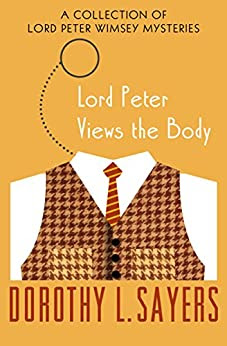
I finished Dorothy Sayer's book of short stories called Lord Peter Views the Body, which was a treat that I gave myself every afternoon between lunch and my to-do list. I also listened to the ten-hour audiobook of How Dante Can Save Your Life by Rod Dreher each evening while working through some new puzzle books. It's much more about Dreher than about Dante, but was a good intro into The Divine Comedy, which I plan to tackle in September (#100daysofdante). During my morning exercises, I worked my way through Agatha Christie's Why Didn't They Ask Evans? (audiobook), which isn't one of her best, but was a fun mystery to try and solve.

I also enjoyed a couple of short stories that I read along with the Literary Life podcast: The Machine Stops by E. M. Forster, and Reunion by Fred Uhlman. Since I'm out from under my heavy academic load, I'm not watching movies for stress-relief. I'm thankful to be back to reading, writing and blogging. 

Blessings,

Friday, April 23, 2021

Audiobooks are Amazing! (Except When They're Not)


I am a huge fan of audiobooks. They helped me get through intimidating books like Moby Dick, Anna Karenina and Nicholas Nickleby. And literary classics are twice the fun when heard in a British accent. Occasionally I abandon an audiobook if the narrator isn't that great. Sometimes I'm frustrated at having to "rewind" the book in order to capture a choice quote. But these are small quibbles. Audiobooks are what got me out of my slump last year so I shouldn't criticize them, right? 

This year I've discovered a few additional reasons why they are not always ideal. 

(1) Sometimes listening to a book makes the story come to life in a bad way. That happened when I tackled Kristin Lavransdatter earlier this year; I became so emotionally immersed in the story that I had to revert to the written page to manage the stress. 

(2) Sometimes they come dangerously close to sounding like bad preaching. Recently my small group began reading the book, Emotionally Healthy Spirituality by Scazzero. It has some good ideas mixed in with pop psychology. Listening to it often made me angry. But when I read the actual page, I was able to overlook the flimsy reasoning and sift out the good stuff.

(3) Sometimes you miss important details. I listened to several Dorothy Sayers' mysteries in February. When I went back through the written text to find favorite quotes, I discovered some essential clues that I'd missed while listening. This is not the fault of the audiobook as much as it is the fact that I usually listen while doing something else (cooking or exercising) so my mind is less engaged.

Still, I'm a huge fan because there's something scrumptious about being read to. Yet I'm aware that it has its limits. What about you? Did you ever find that listening to a certain book was a bad way to "read" it?

Blessings,

Thursday, February 25, 2021

Favorite Books in February

February was a surprisingly great reading month for me. I finished Kristin Lavransdatter, which was a grueling, but powerful book.

To offset the heaviness of KL, I listened to three delightful audiobooks: Whose Body? (the first Lord Peter Wimsy novel by Dorothy Sayers), 84 Charing Cross Road by Helen Hanff (which was a read-along with the Literary Life Podcast group), and The Ghost and Mrs. Muir, which I reviewed here. This last book caught me completely by surprise and may just be one of my favorite books of the year.

I don't usually read so many favorites in one month, but one more title hit it out of the park for me: L.M. Montgomery's A Tangled Web. I did not love it unequivocally and will highlight some of my reservations in next week's review. Still, it was funny and poignant, and the way that Montgomery brought closure to the story lines was heartwarming and satisfying.

I read all of these for free through my library app, Hoopla, (except for Kristin L. which I bought when it was on sale.)

What was your favorite February book?

Blessings,

Friday, December 18, 2020

N or M? by Agatha Christie

In book three of the Tommy and Tuppence series, N or M?, the Beresfords are feeling sidelined by their age. It’s spring of 1940. World War II is raging and Tommy is too old for anything but government paper-shuffling jobs. As the story begins, he and Tuppence are reviewing past escapades and wishing they weren’t so “useless” for their country’s present needs. Happily, the opportunity arises for the two of them to become involved in a hunt for fifth columnists.

Aside from giving us a top-notch mystery, Christie also deals with deeper questions such as patriotism and prejudice.  Some of the characters wonder if loyalty to one’s country is worth dying for. Is ANYTHING worth dying for?, they wonder. Others discuss their hatred of the Germans and how it is easy to hate them as a whole, but harder when you think of them as individual mothers and shopkeepers, etc. The story was written in 1941 so I find it interesting that any sympathy for the Germans was expressed at all. 

I loved all the literary and biblical references. One woman is described as having a fiercely determined look like Jael as she drove the stake through Sisera’s brain (Judges 4:21). One of the key plot points is based on the story of King Solomon.

The spy was caught about 2/3 of the way into the book and I wondered how Christie would fill up the rest of it. I needn't have worried! I spent most of my Sunday afternoon listening to the last two and a half hours because I couldn't wait to see what happened. Those final chapters were full of surprises and the closing paragraphs were warm and funny. 

This is another remarkably clever book by Christie. I highly recommend the audio books in this series if you can find them. (They are on YouTube if your library doesn’t have them.) Be forewarned. There is more swearing in this book than in the rest of the series. You can skim over it in print, but not the audio. I linked to the single Kindle volume above, which is $5.99. Unfortunately, I can no longer find the deal of all five books for $1.99. 

Blessings,

Friday, December 11, 2020

Cozy Christmas Suggestions

Most of us will be having quieter Christmas celebrations this year. And that's okay. It's a good thing that we'll focus less on shopping frenzies and over-full calendars and have more time to pay attention to the real meaning of the season.

I am reading some Christmas-themed books (A Christmas Carol, Shepherds Abiding and Letters from Father Christmas). I also plan to listen to Hercule Poirot's Christmas on YouTube, narrated by Hugh Fraser. In my early days of blogging I wrote about two free audiobooks that you might enjoy.

We are getting ready for our annual viewing of the movie, The Nativity Story, reviewed here. I also have some suggestions for lesser-known holiday films here. Last of all, I'm enjoying quiet, worshipful music in addition to the peppier tunes. Another blog post from yesteryear highlights some of those songs. 

May you have a peaceful and blessed Christmas,  

Friday, August 7, 2020

Nicholas Nickleby by Charles Dickens

G.K. Chesterton called Nicholas Nickleby Dickens’ first real novel. The previous three publications had been Sketches by Boz (no hero), the PickwickPapers (older hero), and Oliver Twist (child hero). This was his first novel with a proper and dignified romantic hero; which means, of course, a somewhat chivalrous young donkey. Chesterton's description captures the personality of our young hero perfectly.

Nicholas is a young man who suddenly loses his father and must do his best to provide for his mother and sister. But in order to do so he must overcome the evil machinations of his uncle and his entourage of seedy companions. There were times when I almost despaired of a happy ending, but chapter 64 finally arrived and all was right with the world. I can’t be sure if the tears that pricked my eyes were from happiness or from relief that I finally finished this 731-page tome.

While I liked the book very much, I did not love any of the principal characters. The bad ones were far too bad and the good ones were far too good. Honest, simple John Browdie, a minor character, was my favorite (reminding me of Joe from Great Expectations). He is an uneducated man with an innate sense of right and wrong, but unlike Joe, he has an enormous sense of humor and self-confidence.

I’m working my way through the Dickens’ canon, and though this was not a favorite, I still relished the hilariously drawn lesser characters and the lovely writing. Take this description of Arthur Gride's house: Meagre old chairs and tables, of spare and bony make, and hard and cold as misers’ hearts, were ranged, in grim array, against the gloomy walls; [tall cupboards], grown lank and lantern-jawed in guarding the treasures they enclosed, and tottering, as though from constant fear and dread of thieves, shrunk up in dark corners, whence they cast no shadows on the ground, and seemed to hide and cower from observation. A tall grim clock upon the stairs, with long lean hands and famished face, ticked in cautious whispers… (p. 590)

I like Chesterton’s suggestion to read the novels in order of publication to watch the progression of Dickens' talent. If you read Nicholas Nickleby (or, better yet, listen to Mil Nicholson read it free at Librivox), follow it up with Chesterton’s witty commentary from Appreciations and Criticisms of the Works of Charles Dickens. (free for Kindle)   

Blessings,

Friday, February 1, 2019

What I Read and Watched in January


I've had a terrific start to the New Year. If you read this blog regularly, you know I determined to read more physical books for the purpose of more careful reading. (Digital books, whether we admit or not, encourage scanning.) Anyway, I've LOVED the books I've read so far. This may be due to the fact that I read them more attentively OR just due to the fact that I'm very choosy about which books I lug to Brazil with me. Probably both are factors.

The books I read were:
1) The Bird in the Tree by Elizabeth Goudge - Book One of a wonderful trilogy. Review forthcoming.
2) The Shallows by Nicholas Carr - contains many valid points on how the internet and social media have changed our thinking and reading habits.
3) Brat Farrar by Josephine Tey - a rip-roaring mystery

I read Be Right (Warren Wiersbe's commentary on Romans) on my Kindle as a part of my morning devotions. And listened to What's Wrong with the World by G.K. Chesterton. (Some of it was laugh-out-loud funny.)

We enjoyed United Kingdom, the story of an interracial marriage that rocked the evolving country of Botswana. This would be a great date night movie since it's based on a true story (something my husband loves) and yet has good acting and a sufficiently happy ending (which I love).

The movie that knocked our socks off was Richard II, the first of four movies in The Hollow Crown series. We've watched Kenneth Branagh's Henry V at least a dozen times so we have accustomed our ears to Shakespearean English. But the pronunciation and clarity of Richard II far outweighed even our beloved H.V. Richard II was not a pleasant story, but it was wonderfully scripted (of course!) and the acting was extraordinary.

Blessings,

Friday, February 3, 2017

Audiobooks for Cheapskates

I've written before about free books at Librivox. And I've mentioned previously about how I avoided joining Audible because I thought the books were too expensive, but then changed my mind. Later, when I had a surplus of books I cancelled my monthly fee and signed up for the "Inactive Light" option which was ten dollars a year, enabling me to buy books whenever I wished (at full price) and to receive e-mails about daily deals.

I have LOVED this option for several reasons. First, even though the daily deals are mostly garbage, occasionally a gem pops up like Brat Farrar by Josephine Tey a few weeks ago, and The Secret Garden a few months ago. Both cost about $3 on sale. Secondly, if I download a classic (free) title from Amazon for my Kindle, the same title is often deeply discounted at Audible, just because I own a copy of it. That's how I got a fantastic version of Anna Karenina for almost nothing. (It's usually $23.)

The last time I checked, the "Inactive Light" option was no longer listed on the site, so I called and they said it was available by request.

In addition to Librivox and Audible, I've just discovered that I can get thousands of free audiobooks (movies, music and e-books too) via my Michigan library (even here in Brazil) through something called Hoopla.

Feeling spoiled rotten (and wanting to share the wealth), 

Friday, May 29, 2015

More Recommended Librivox Recordings

Several of you left comments on an earlier post, recommending above average readers at Librivox. I'm already hooked on Adrian Praetzellis, and Mil Nicholson (photo). When I googled Nicholson, I discovered another treasure: Ruth Golding (an excellent reader herself) has compiled a list of the best British voices over at Librivox.

Andy Minter is an excellent reader who lists his recordings on his website. Mark Smith does a great job too.

I look forward to reviewing many of these.

Happy Summer listening!

Friday, March 13, 2015

The Best Yes by Lysa TerKeurst

Books about priorities are a dime a dozen these days, and that's a good thing because there's always one to grab when my schedule starts sapping the life out of me.

Lisa TerKeurst clearly outlines the dangers of an over-committed schedule in her book The Best Yes. She writes appealingly of how our filled-up calendars make for empty souls. And she makes a good case for saying "no" to peripherals so that we can say "yes" to the specific tasks we know that God has called us to do. She skillfully leads her readers through various scripture passages and reminds them that the best "yes" of all is to rest in Jesus.

I resonated with so much of the book that I know I'll be re-reading it in the near future, but I have just one caveat. Although I loved the content of the book, I did not always enjoy its tone. It is clear from the truths and experiences shared by TerKeurst that she is not a shallow woman. Yet the illustrations in the book are often frivolous or in bad taste.

How many times do I want to hear that she almost wet her pants at her daughter's track meet? This would work as a funny story from a podium at a ladies' conference, but book writing demands more thought and word precision. Can you imagine Edith Schaeffer sharing such a thing in one of her books? Did TerKeurst's editors make her write this fluff so she'd appeal to the average American woman? And what does that impy about their opinion of us?

Anyway, if you are a chronic people pleaser (like me) who finds herself dog-paddling furiously to stay above water most days, The Best Yes is like a rope being thrown out to pull you into shore.

A worthwhile read.


Friday, August 29, 2014

Thoughts on Audible.com

Audiobooks are expensive. Audible charges $14.95 per month/book and therefore, I wasn't even vaguely interested in joining. When I registered my new Kindle, I was given the option of two free Audible titles (normally it's just one) and the right to drop my membership at any time. Since I'd been wanting to buy a pricey audio Bible, the offer was too hard to resist. I decided to get my free books and hang around for a couple of months to buy a few more at the regular price.

As I cullled through the titles I discovered many favorites at rock-bottom prices. Without using either of my "expensive" credits, I bought two favorites: Jane Eyre and Persuasion. Through their summer kids' book sale I got Peter Pan. At their anniversary sale I got two Shakespeare plays for 99 cents each. Also, there are some deep discounts if you already own the book version on Kindle. Did I mention that most of these titles are done by outstanding British voices? Top that with their beyond excellent customer service, and I'm one happy camper.

The final results...

ESV Audio Bible - Free Credit (I would not recommend this version because of navigation difficulties.)
Classics of British Literature (24 lectures) - Free Credit ($250 on The Great Courses website)
Jane Eyre - $2.99
Jane Austen's Persuasion - 69 cents
Psalms (KJV) - $2.35
Peter Pan - $2.99
Shakespeare's Julius Caesar - 99 cents
Shakespeare's Romeo and Juliet - 99 cents
Paid Credit #1 - With a Buy-One-Get-One-Free I purchased Part One of The Lord of the Rings (19 hours!) and Higher Call, a WWII title I've been wanting to read.
Paid Credit #2 - Chitty Chitty Bang Bang by Ian Fleming
Wind in the Willows - $2.99
Richard Burton reading Poetry of John Donne - $4.95
Screwtape Letters - $1.95

Summing it all up: If you get your free title(s) and several deals along with a few regularly priced books, it's VERY reasonable. (For around $50 I got 13 books and 24 lectures.) Well-produced audiobooks at about $4 each are quite a bargain.


Friday, August 15, 2014

Huckleberry Finn by Mark Twain

"All modern American literature comes from one book by Mark Twain called 'Huckleberry Finn,'" Ernest Hemingway famously declared in 1935. Considered by some to be the greatest American novel, Huckleberry Finn is definitely not one of those classics you have to struggle through. Twain is a gifted story teller and there is nary a dull moment in this tale of a young boy and his struggle to live free from society's constraints. Plus, a lot of it is laugh-out-loud funny.

Critics of the book fall into two distinct camps. The loudest group calls it racist for it's profusion of derogatory references to African Americans (This is why it has been banned in many schools). The other group insists that Twain was reflecting the language of the times BUT was making a strong case for the humane treatment of black Americans. After all, Huck grows to love and respect Jim, and refuses to return him to slavery.

This idea of allowing Jim to go free was so counter-culture that Huck decides it must be a sin: He writes, "All right, then, I'll go to hell. . . . And I never thought no more about reforming. I shoved the whole thing out of my head, and said I would take up wickedness again, which was in my line, being brung up to it, and the other warn't. And for a starter I would go to work and steal Jim out of slavery again; and if I could think up anything worse, I would do that, too; because as long as I was in, and in for good, I might as well go whole hog." (from Chapter 31)

I listened to the audio version done by Elijah Wood, which was outstanding. My only quibble is that it is easier to skim over coarse language in a physical book, but impossible to do so with an audiobook. Having been taught as a child that the "N" word was profanity, hearing it over 200 times caused a continual pang.


Friday, March 14, 2014

Recommended Librivox Recordings

     
          Librivox is an online source for free audiobooks that I've used and enjoyed in the past few years. Their goal (which is commendable) is to make all public domain books available in audio versions. The way they hope to accomplish this is to let anyone volunteer to read a book. Of course, this leaves their vast selection in the hands of a mixed bag of excellent, mediocre and awful readers. Instead of complaining about the books that aren't worth listening to, I thought I'd post a list of the exceptional titles. The most satisfying listening experience comes when there is a single narrator, but occasionally I make an exception to this. Clicking on the titles will take you straight to Librivox.


Conscience Pudding - a Christmas short story
The Claverings by Anthony Trollope (multiple readers, my review here)
Confessions of Arsene Lupin by Leblanc (mystery, my review here)
Daniel Deronda by George Eliot (my review here)
El Dorado (Sequel to Scarlet Pimpernel, my review here)
Emma by Jane Austen (Version 3 is by one of the best readers, Elizabeth Klett, my review here)
The Extraordinary Adventures of Arsene Lupin by Leblanc (my review here)
Lady Audley's Secret by Braddon (narrated by Klett, my review here)
Northanger Abbey by Jane Austen (Version 2 is narrated by Klett, my review here)
A Room with a View by E.M. Forster (Version 2 by Klett, my review here)
Turn of the Screw by Henry James (Version 2 by Klett, my review here)
The Virginian by Owen Wister (western, my review here)
The Warden by Trollope (some of the narrators are poor, but Minter makes it all worth it, review here)
Wives and Daughters by Elizabeth Gaskell (Version 2 by Klett, my review here)
Woman in White by Wilkie Collins (mystery, various readers, review here)

Have you listened to an especially good classic at Librivox? If so, please leave a note in the comment section.

(Part two of this post is here.)

Postscript: I recently stumbled upon Julie's (at Forgotten Classics) list of favorite Librivox readers here. I don't agree with all of her choices, but I look forward to checking out a few names that are new to me.

Friday, August 16, 2013

Jayber Crow by Wendell Berry

Fans of Wendell Berry know his favorite themes are the importance of community and the disadvantages of runaway progress. His novel Jayber Crow is no exception. In his gentle, inimitable style Berry takes us through the ups and downs of Port William’s bachelor barber.


Born in 1914 and orphaned at a young age, Jayber Crow is now 72 years old and is looking back on his life.  He begins with early memories of the orphanage where he recalls asking hard questions about faith and getting few satisfying answers.  Even though he abandons Christianity for a time, he can’t get away from feeling that he is “blessed” and even “called”.  Biblical language is sprinkled throughout the book. On returning to Port William he writes, “In one breath I was lost and a stranger, and in the next I was found.”(p. 87)


One reason he scorned religion was because it preached against pleasure.


This religion that scorned the beauty and goodness of this world was a puzzle to me. To begin with, I didn’t think anybody believed it.  Those world-condemning sermons were preached to people who, on Sunday mornings, would be wearing their prettiest clothes... The people who heard those sermons loved good crops, good gardens, good livestock and work animals and dogs; they loved flowers and the shade of trees, and laughter and music; some of them could make you a fair speech on the pleasures of a good drink of water or a patch of wild raspberries... And when church was over they would go home to heavenly dinners of fried chicken, and creamed new potatoes and creamed new peas and hot biscuits and butter and cherry pie and sweet milk and buttermilk. And the preacher, having foresworn on behalf of everybody the joys of the flesh, would eat with unconsecrated relish. (p. 161)


Mattie Chatham is a key character in the book. Although they never marry, Jayber’s love for her causes a dramatic turning point in his life. Through his selfless love for her he learns to love others more deeply and to accept the mysteries of faith that he had previously rejected.


In a moment of musing he writes, It is not a terrible thing to love the world, knowing that the world is always passing and irrecoverable, to be known only in loss. To love anything good, at any cost, is a bargain. (p. 329)


It was a bold move for Christian.audio.com to offer this book selection since there is unchristian behavior throughout; readers of traditional Christian novels may be offended by some profanity, drinking and womanizing.  To top it off, the one  “Christian” in the book is the mean-spirited, unhappy Cecelia Overhold. Average reader beware! But if you want to read a well-written, poignant tale of one man’s search for love and for God, you’ll be touched by Jayber Crow.


Friday, July 5, 2013

The Man Who Knew Too Much by G. K. Chesterton


The Man Who Knew Too Much is not a novel as much as it is eight short stories with the same man as their protagonist.  It was written in 1922 and is not to be confused with the Alfred Hitchcock film of the same title about a kidnapping in Morrocco.

Horne Fisher is a rich, seemingly lazy, man who is so brilliant that he solves crimes without much effort. He is described as someone who was "born tired." Yet he is the "man who knows too much" because he is related to several people in powerful political positions and has inside knowledge of how the English government is being run.  Many of the stories have a twist in which Fisher has to let a crime happen (or go unpunished) for the greater good of the country.  Harold March is the journalist friend who gets to watch the mastermind at work.

It is classic G.K. Chesterton with enigmatic phrases ("You never know the good in man until you've seen him at his worst") and surprising twists (especially Chapter 7.)

The original book has 12 chapters but the audiobook I listened to only had the chapters that included Horne Fisher. My version was excellently done by B.J. Harris over at Classic Tales Podcast.

Friday, June 7, 2013

Emma by Jane Austen

I've been trying to get through Emma for decades but always tire of its annoying heroine by the fifth chapter. So when I heard that Elizabeth Klett (at Librivox) had done Emma, I was sure I would finally get through it. (Klett had changed my mind completely about Northanger Abbey, another Austen novel I did not enjoy.)

Emma Wodehouse is an impressionable young woman who lives alone with her hypochondriac father.  She has never been in love, but thinks she knows everyone else's hearts and has chosen matchmaking as a hobby.  The book is about her "insufferable vanity and unpardonable arrogance" in arranging everybody's destinies (Emma's own words later in the book).

If you can make it past Chapter Fifteen, you'll see Emma becoming aware of her shortcomings; and by the end of the book you'll even like her. Even so, my favorite character in the book is Mr. Knightly, an old family friend, and a gentleman to the core.

Miss Klett does an amazing job with voices, portraying each characters personality with aplomb.  But she surpasses herself with the voice of Miss Bates, the talkative empty-headed spinster.

I was intrigued by the fact that Peter Leitharth calls this the "most Christian" of Austen's novels.  I think it's because two of the characters act very wrongly and are shown much grace by the book's end.

I'm glad I finally got through this one. Thank you, Elizabeth Klett, for making it possible.