Showing posts with label fiction. Show all posts

Friday, July 25, 2025

Green Dolphin Street by Elizabeth Goudge

Green DolphinStreet is the story of two sisters who live in the Channel Islands in the mid-1800s. Marguerite and Marianne couldn’t be more different. Marguerite (like her name "daisy") is cheerful and carefree, ready to drink in whatever joys life has to offer. Marianne is less beautiful and much less easily pleased. But she has a thirst for knowledge and for experiences that make her sturdier and more dependable in times of trouble.

Her parents were much exercised over this brain of Marianne’s and were doing their best to repress it within ladylike proportions. But Marrianne wouldn’t be interested in sensible things like crewel work and water-color painting and duet playing on the pianoforte with her little sister Marguerite, even though she did all these things superlatively well. That was the trouble with Marianne, she did them too well, and her restless intellect reached out beyond them to things like mathematics and the politics of the Island parliament, farming, fishing, and sailing, knowledge that was neither attractive nor necessary in a woman and would add nothing whatever to her chances of attracting a suitable husband

Marianne and Marguerite fall in love with the same young man, William Ozanne. I can’t tell you which one he chooses, but I can say that this novel is no fluffy romance. Instead it’s about the high cost of loving. The original title was “Green Dolphin Country,” which was more appropriate because each character in the book is yearning to find their own “country”, the place where they feel most at home. Some look for this in the love of another person. Others seek it in adventurous places. But all of them learn that this longed-for fulfillment comes at a very high price – death to self. Elizabeth Goudge is a master at this type of story. She writes of flawed people who through their disappointments learn to love in richer ways. Self-giving love is the key to finding their “country,” their native soil.

Goudge is not only a master of writing deeply, she also writes beautifully. Here is a description of the Mother Abess’ room in a convent: In spite of its austerity the room was not cold. It was very beautiful in its simplicity, and Marguerite within the flushed white walls felt as though she were inside a mother-of-pearl shell.

And this description of a loving kiss: It neither promised nor gave security, it was rather a dedication of themselves in comradeship to the danger and pain of living.

I started this book carefully noting passages that I wanted to highlight here on my blog, but ditched that as soon as I became engrossed in the story. When I came down to earth near the end of the book, I finally stopped to underline many beautiful paragraphs. By that time, I didn’t care if I ever blogged about this book or not. I was just glad to have experienced it. My copy is almost 500 pages long so it’s not an easy read, but if you like a well-told story, you’ll be glad to make the effort.

 Blessings,

Friday, January 26, 2024

The Christmas Pig by J.K. Rowling

I never expected to be blindsided by The Christmas Pig. I hated the first bleak chapters, and only continued because many people from the Lit Life Podcast group raved over this book. I'm glad I persevered. 

Young Jack has gone through many painful family experiences, but through all of them, he has been comforted by a much-loved stuffed pig (DP). When his mean step-sister throws DP away, Jack is devastated. Just when you think you can't take anymore nastiness, Rowling turns the story completely around, doing some kind of literary magic that had me gaping throughout the rest of the story. I've never read anything by her before so I wasn't aware of her ability to create alternate worlds. I was stunned by her brilliance.

The rest of the narrative takes place on Christmas Eve when Jack is transported into the World of Lost Things to look for DP.  There he discovers that lost items belong to different categories. Items in the "mislaid" section are considered temporarily lost. The "disposable" section is a scarier place because if they land there, they are less likely to be searched for since they can be easily replaced. Other categories exist, but I don't want to give too many spoilers.

Rowling weaves together an amazing variety of lost things. Not only are there the requisite umbrellas, house keys, and socks, there are also lost feelings such as hope, ambition, and happiness. By giving human charcteristics to these misplaced items, Rowling weaves a powerful story of what is means to be valued. 

It had "Toy Story" vibes with traces of The Velveteen Rabbit (and even a smidgin of Pilgrim's Progress!) I am intrigued by the number of people who have seen Dante-esque themes in The Christmas Pig. I was not smart enough to pick up on those, but hope to re-read the book more carefully next time.

Because the the tone is dark overall, this would not be a good story for young children, but the book ends with lots of love and warmth. I'm very glad I read it.

Blessings, 

Thursday, February 18, 2021

Kristin Lavransdatter by Sigred Undset

I rarely review a book unless I love it, but Kristin Lavransdatter is an exception. Undset’s three-volume story of a 14th Century woman’s life in Norway was hard to get through, yet worth the effort.  Although I am not a Catholic, I have a deep appreciation for Catholic authors who write about sin, suffering and redemption without fluffy conclusions.

Kristin Lavransdatter (“daughter of Lavran”) grew up in a devout family but chose to go against her parents’ principles in her choice of husband. It is hard to review the book without spoilers so I will just say the bad choices made in the first book ("The Bridal Wreath") have a ripple effect throughout the rest of the trilogy. It is a devastating critique of the high cost of sin. Yet it miraculously avoids being preachy.

References to immoral behavior are discreet, but frequent and troubling. Undset did such a remarkable job of creating living, breathing characters that I agonized over each one of them. So much so that I finally did something I rarely do. To reduce the anxiety, I read a synopsis of the books so that I could be better prepared emotionally for what was coming up next. For that reason, I did not “ugly cry” at the end of the book, which is what most people say they do. Admittedly, I was in a daze, but that is as far as it went.

I would never have finished the book if it had not been for the members of the Literary Life podcast group who cheered me on. (I was even part of a Lavransdatter Support Group on Facebook!) Although I had the audiobook, I soon learned that it was more painful to hear the story, than to read it, so I used the audio format sparingly.

Why recommend this difficult title? Because it powerfully portrays men and women in all their glory and in all their brokenness trying to make sense of the world through their mixed lenses of superstition and Catholicism. It describes the joys and suffering of motherhood in a way I've rarely seen in fiction. And there are tiny threads of grace woven throughout the narrative that keep it from being completely hopeless.  

Now I can check this title off of my "14th Century book" category. I think I'll take a breather, however, before I pick up "book I've most avoided" (Anna Karenina.) The Literary Life reading challenge for 2021 is posted here

Blessings,

Friday, June 28, 2019

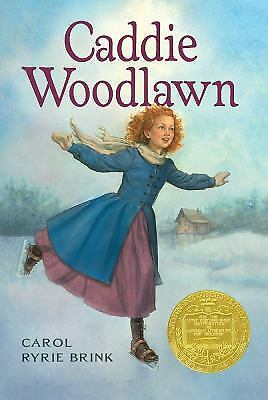
Caddie Woodlawn by Carol Ryrie Brink

Caddie Woodlawn is a sweet coming-of-age story that takes place in the 1860s. Because she was a sickly baby, her father recommends that she get plenty of exercise and sunshine playing outdoors rather than staying at home to learn domestic duties. She and brothers have wonderful adventures, but as time goes on she must decide how to balance her wildness with her femaleness. Her father helps he to see that she can be true to her adventuresome spirit while at the same time developing womanly virtues. Certainly, a book that highlights the special contribution that women make to society would not be published today, but I appreciated Brink's careful handling of this subject.

The story has some similarities to the Little House books in that Caddie's mother is disdainful of Indians while her father is more open and trusting. I couldn't help comparing the books in my mind since I re-read all the Little House books last year and was so captivated by them. Although the Woodlawn family doesn't experience the same crises as the Ingalls' clan, they face their difficulties with the same no-nonsense attitude. When Caddie falls through the ice while skating, her brothers don't run for help. Instead they find a way to save her:

With cool presence of mind, Tom made Warren lie down on the ice, and, catching hold of Warren's feet, he pushed him out over the thin ice until he could reach Caddie's groping hands. "Hold tight, Warren,"he shouted. "I'll pull you both in!" And he did. Nobody made much fuss over it. Pioneer children were always having mishaps, but they were expected to know how to use their heads in emergencies. (p. 74)

The rapscallion escapades are balanced with tender stories of Father's childhood, Caddie's growing friendship with her pesky sister, and a neighbor boy's heroism during a prairie fire. Through it all Caddie learns that though the world is filled with painful challenges, it also offers delightful surprises. She concludes that "Whatever life is like, I like it." This would be an excellent read-aloud for children.

Blessings,
 

Friday, February 22, 2019

The Long Winter by Laura Ingalls Wilder

I could hardly put this sixth book in the Little House series down! How on earth are the Ingalls' family going to survive The Long Winter?

The story begins with Laura offering to help Pa with the haying. Although she is very young, he relents so that he can finish before winter. Even with her small size and limited strength, she does her best and they complete the task.  I loved it that she willingly gave of herself even though it was hard. The first night she goes to bed with a feeling of accomplishment: Laura was proud. Her arms ached and her back ached and her legs ached, and that night in bed she ached all over so badly that tears swelled out of her eyes, but she did not tell anyone." (p. 9) That's almost impossible to believe in the selfish, selfie-crazed, "look at me!" world that we live in.

Everyone in the story gives of themselves even when it seems like there is nothing left to give. During that long winter they are hit by blizzard after blizzard. The food and fuel run out. The general store is bare. But complaining is forbidden. Each one is expected to do their part to keep the home running. Ma Ingalls invents recipes out of odds and ends that are left over. She creates a "button lamp" when the kerosene is gone. When there is no more coal, Mr. Ingalls comes up with a solution.

I appreciated the patience and kindness that were expressed during their trials. When Pa comes back from the store with the only food item that was left, Ma expresses her thanks, saying how thoughtful it was for him to know that they would need tea on the upcoming cold nights. With no prospect of Christmas gifts of any kind, Ma and the girls gather up their pennies and nickels to buy one item the stores are not out of - a pair of suspenders for Pa. The girls are as thrilled to give this present as their father is to receive it.

Sacrificial love is a repeated theme in all of the books and one of the reasons they merit multiple readings. A fun element in this book is that Almonzo Wilder is introduced as a part of the community. (His story is told in Book Four, Farmer Boy, but that is before he moves out west and meets the Ingalls' family.) He and his older brother Royal have several interactions with Mr. Ingalls, but not the rest of the family yet.

I was so immersed in the story of multiple blizzards that I was surprised to look up and see the sun shining through my window! And I shed a tear for joy when the "Chinook" finally blew in.

This is probably my favorite Little House book so far.

Blessings,

Friday, June 8, 2018

Friends at Thrush Green

Now that I'm in the tenth book in the Thrush Green series, the townspeople are old friends and I often enjoy sipping a cup of tea while sitting down to "chat" with them. In fact, tea time is so much a part of each book that in this one it is referred to as a "never failing help in times of trouble," a reference to Psalm 46:1 that I didn't find sacrilegious in the least. The ladies of Thrush Green frequently render comfort to one another over a hot drink and a slice of sponge cake.

Although Friends at Thrush Green purports to be about the two retired school teachers (from book nine) returning for a visit, many other townspeople have moments when they take center stage. Violet's struggles with her increasingly senile sister and the new headmaster's ill wife are just two examples.

This was not your run-of-the-mill, nothing-much-happens Thrush Green novel. I enjoyed the many mysteries. Will the persistent Percy Hodges finally find a new wife? Who is the mysterious Teddy and will he win the heart of one of the spinsters? What is Mrs. Lester's baffling illness? Is Bertha just eccentric or is she a certified lunatic?

I loved finding the answers to these questions. And, as always, I loved the gracious way that the folks at Thrush Green dealt with them, especially when the answers were difficult. This is cozy fiction by modern standards even though there are occasional lapses in morality (Nelly Pigott left her husband for another man in an earlier book and there have been a few babies born out of wedlock).

As always, there's the lovely writing: There was something about running water which healed the spirit as surely as sleep did... He sat by its side on a grassy bank, watching the secret life of the water creatures. Flies studded the glistening mud at the edge of the bank and a trio of butterflies played among a patch of nettles. An ancient willow tree stretched a gnarled arm over the water. Purple loosestrife and wild mint stirred in a light breeze, setting free the river smell unforgettable, unforgotten, which brought back to the watcher on the bank a hundred memories of other loved rivers. Charles sat there for almost half an hour, letting the magic work its spell and then he rose to return home. (p. 186)

P.S. These e-books are expensive so see if you can download them from your public library like I do.

Blessings,

Friday, February 16, 2018

News of the World by Paulette Jiles

I rarely read modern fiction, so I'm not quite sure how this book landed on my radar. But I'm glad it did.

Seventy-one year old Captain Jefferson Kidd is travelling through Texas, carrying "the news of the world" to small towns where folks will pay a dime to hear him read the papers. It's just after the Civil War and, in many ways, Texas is the wild west. Kidd had hoped that sharing stories from all over the world would help bring unity to divided people: If people had true knowledge of the world perhaps they would not take up arms and so perhaps he could be an aggregator of information from distant places and then the world would be a more peaceful place. He had been perfectly serious. That illusion had lasted from age forty-nine to age sixty-five.

In one city where he stops, his offered $50 to deliver an orphan to her people who are 400 miles away. The girl had been kidnapped four years earlier by a band of Kiowa Indians and had recently been rescued by the U.S. Army.  Kidd names the ten-year old Johanna and promises to take her safely home. As they travel together, warding off bandits and busybodies, they learn to communicate and to build a friendship that brings healing to both of them.

Kidd had become indifferent to humanity. Now it was different. He was drawn back into the stream of being because there was once again a life in his hands. Things mattered. The strange depression and spiritual chill he had felt were gone. . . . Joy and liveliness had come back to his readings now. His voice had its old vibrancy again and he smiled as he read; . . . . [he] recalled how dull his life had seemed before he had come upon her in Wichita Falls.

The exquisite writing was balm to my soul. Jiles helped me to see and hear the settings and the people when she wrote that someone was as "freckled as a guinea hen" or that "His pen nib scratched across the newsprint with a noise like avaricious mice." Some turns of phrase were so apt and lovely that I laughed out loud with sheer joy.

She also does a wonderful job establishing the historical context, adding details about post Civil War conflicts, the economy, the laws (or lack of them), Kiowa Indian customs, and more. But it was never an overwhelming amount of details. The clash between the Kiowa and the white man's cultures is handled with skill and without pat answers.

The denouement in the final chapter was spot on. The reader learns that it isn't the big "world" news that changes people, but the daily sacrificial offering of one's life to another.

In spite of the occasional profanity (none of it felt gratuitous), this is a beautiful story of grace in the midst of brokenness. The narrator at Audible, Grover Gardner, had the perfect gravelly voice for this book. I look forward to revisiting this novel in the future.

Blessings,

Thursday, November 6, 2014

Charlotte's Web by E.B. White

Peter Pan and Wind in the Willows are children´s classics that I revisit regularly. But I would not have read Charlotte's Web again if it had not been for the student I am tutoring. Frankly, I had forgotten what a beautifully touching book it is.

E. B. White succeeds in creating a gentle story while at the same time acknowledging some of life´s harshest realities: death, loneliness, selfishness, and the passing of time. But, thank goodness, he is never maudlin.

I´m a sucker for gorgeous language and this book offers up a rich serving of delectable words and phrases that should whet a child´s appetite for more: "Play?" said Templeton, twirling his whiskers. "Play? I hardly know the meaning of the word." "Well," said Wilbur, "it means to have fun, to frolic, to run and skip and make merry." 

Other words to savor are explained by Charlotte or understood in context. For example, Templeton tells Wilbur to be careful by saying, "I don´t want to be stepped on, or kicked in the face, or pummeled, or crushed in any way, or squashed, or buffeted about, or bruised, or lacerated, or scarred, or biffed." (p. 29) I love any book that treats children as intelligent enough to figure these words out.

The gentle philosophizing was a treat that probably only adult readers would catch, and I relished it.

When your stomach is empty and your mind full, it´s always hard to sleep. (p. 32)

Men rush, rush, rush all the time. (60). Charlotte´s philosophy is Never hurry, Never worry. (p. 65)

Life is always a rich and steady time when your are waiting for something to happen or hatch. (p. 176)

The book´s main impact comes from the unusual friendship between Charlotte and Wilbur. When Charlotte determines to save his life, he declares, "Why did you do all this for me? I don´t deserve it... I´m just an ordinary pig!" "You´re terrific as far as I´m concerned," she replies. And herein is the essence of the story - sacrificial love based not on merit, but on grace.  It is a beautiful story because it echoes The Truest Story.

Its gentle jabs at human foibles, its remarkable prose and its theme of self-giving love make Charlotte`s Web a delight to read.

Friday, October 4, 2013

Island Magic by Elizabeth Goudge

Once in a while a book comes along that’s just too scrumptious to put down, one that makes you abandon your regular habit of taking notes while reading so you can get lost in the story. Island Magic is that kind of book.


Rachell and André are the proud parents of five high-spirited children. Their lives, though, are not peaches and cream. The year is 1888 and they live on a run-down farm in the town of St. Pierre, on one of the Channel Islands (between England and the coast of Normandy).  Their sixteen year marriage has been tried by fire as they’ve buried three babies and used up all of Rachell’s inheritance to keep the farm going.  


The name of the farm is “Bon Repos” and when André tells Rachell that they’ll have to abandon it and take their losses, she refuses to believe that the place that they’ve created as a refuge for themselves can be let go so easily.


When a shipwrecked man is brought to the island, Rachell immediately takes him in, sensing that somehow he’ll be the solution to their problems. The man, Ranulph, has spent his whole life refusing to be tied down to anyone or any place yet he finds the du Frocq family hard to resist.  As the story unfolds he finds healing for some of his past hurts and contributes to the welfare of the family in various ways. Goudge throws in a few twists and surprises for good measure.


As always, she succeeds in writing a beautiful story while weaving in themes of mortality, committed love, and the freedom of “tying oneself down” to duty and to family.


In the end, the island magic is not the superstitions of the people (which are highlighted throughout the book), but the way it forces people in such a small space to be a community. “You can’t be an individualist on our Island, she said. . . . With the sea flung round us and holding us so tightly we are thrown into each other’s arms - souls and seasons and birds and flowers, and running water. People understand unity who live on an island. And peace.” (p. 262)


This was Goudge's first novel, published in 1934. A lovely book!


Friday, December 14, 2012

The Hobbit by J.R.R. Tolkien

In a hole in the ground there lived a hobbit.   Not a nasty, dirty, wet hole, filled with the ends of worms and an oozy smell, nor yet a dry, bare, sandy hole with nothing in it to sit down on or to eat:  it was a hobbit hole, and that means comfort. . .   This is the story of how a Baggins had an adventure, and found himself doing and saying things altogether unexpected.  He may have lost the neighbors’ respect, but he gained - well, you will see whether he gained anything in the end.

So begins the delightful story of Bilbo Baggins and his escapades. Even though Bilbo asserts that he has no use for adventures (“Nasty disturbing uncomfortable things!  Make you late for dinner!”), he embarks on a journey with Gandalf and thirteen dwarves that will change him forever.  Since I had just finished the Lord of the Rings trilogy I couldn’t help but recognize their similar themes: greed, villainous foes, a hopeless quest, a returning king, a definitive battle, an adventure that lasts a year, and unimpressive hobbits who astound everyone with their faithfulness and courage.

However, it probably wasn’t a good thing that I read this after The Lord of the Rings because it seemed so light in comparison.  Still, because of it’s lightness, this would make a great family read aloud.  In fact, with dwarves named Ori, Gori,  Balin, Dwalin, Fili and Kili, the book BEGS to be read aloud.  


On second thought, the "lightness" of The Hobbit makes the ending of the LOTR trilogy all the more amazing. Because the hobbits have matured through suffering, they are able to save the shire from evil influences, something the untried hobbits are unable to do.

Friday, November 2, 2012

Sunshine Sketches of a Little Town by Steven Leacock

This Canadian classic (which just celebrated its 100th anniversary) has been on my TBR list for years. But I never got around to “reading” Sunshine Sketches of a Little Town until I downloaded it from LibriVox.  Each of the twelve chapters describes a person or event in the mythical town of Mariposa in the early 1900’s. Leacock pokes fun at small town ways, but he seems to do it without any malice.  Much of the humor is understated and since the majority of the narrators read with deadpan voices, I almost missed some of it.  I kept thinking that if a man like Garrison Keillor got hold of this material, it could be laugh out loud funny.

Many of the characters in the stories have an exaggerated sense of importance. Others, like Reverend Drone and Peter Pupkin have an overwrought sense of worthlessness. Pupkin, the bank teller, is afraid he is unworthy of Zena Pepperleigh, the judge’s daughter.  Except for the fact that suicide is no joking matter, the chapter on Pupkin’s attempts to do away with himself so that Zena will notice him is quite funny.

This is an easy, yet slow read (Lately, all books seem slow after the Hunger Games), but it might be worth a listen if you’re cooking or sewing and want a good story in the background.

Sample from Chapter One: 

Of course if you come to the place fresh from New York, you are deceived. Your standard of vision is all astray; you think the place is quiet. You do imagine that Mr. Smith is asleep merely because he closes his eyes as he stands. But live in Mariposa for six months or a year and then you will begin to understand it better; the buildings get higher and higher; the Mariposa House grows more and more luxurious; McCarthy's block towers to the sky; the buses roar and hum to the station; the trains shriek; the traffic multiplies; the people move faster and faster; a dense crowd swirls to and fro in the post office and the five and ten cent store -- and amusements! well, now! lacrosse, baseball, excursions, dances, the Fireman's Ball every winter and the Catholic picnic every summer; and music -- the town band in the park every Wednesday evening, and the Oddfellows' brass band on the street every other Friday; the Mariposa Quartette, the Salvation Army -- why, after a few months' residence you begin to realize that the place is a mere mad round of gaiety.

Also available free for Kindle.

Friday, October 26, 2012

John Halifax, Gentleman by Dinah Craik

John Halifax, Gentleman (1856) is a classic of the Victorian era.  It is the story of a David and Jonathon-like friendship.  It is also about a long and happy marriage.  But mostly it recounts the life of a man who never backs down from his principles.  The book proposed the “revolutionary”  idea that a man is not a gentleman primarily because of wealth and title, but because of integrity, honor and hard work.

Halifax is a poor orphan who works his way up from poverty; his story is narrated by Phineas Fletcher, a sickly boy whom he befriends:  

From my birth I had been puny and diseased; my life had been a succession of sicknesses and I could hope for little else until the end…  But I was very content; I had a quiet home, a good father, and now I believe I had found the one thing I wanted – a good friend.

Later when Phineas asks how he will get on in the world, Halifax replies that he has “NIL” to which Fletcher replies, “Except youth, health, courage, honor, honesty and a few other such trifles.”  These trifles made Halifax one of the most beloved characters in Victorian literature.

This is a slow-moving but satisfying book.  It uses old fashioned words like “discomfited” and “sententious”.  But it is no more sentimental than, say, Little Women
, and much less moralistic than Elsie Dinsmore. I have read novels in which the hero or heroine are too good to be true (Little Lord Fauntleroy comes to mind), but I did not find this to be the case with John Halifax.  

There is one teeny-tiny episode of bad theology, but for the most part this book celebrates true manliness and womanliness, the joys of family life, and the virtues of walking in God’s ways.