Friday, August 20, 2021

A Place to Hang the Moon by Kate Albus

I avoid modern books as a general rule, but kept hearing rave reviews of A Place to Hang the Moon by Kate Albus. Thankfully, I found I could listen to it for free via Hoopla, and have been devouring this wonderful story for the last few evenings. 

William, Edmund and Anna are siblings who were evacuated from London at the beginning of WWII. Their home life had been unhappy and they have learned to look out for each other. They find solace in each other's company and in books. It's heartwarming to read of their favorites such as Mary Poppins, Winnie the Pooh, Wind in the Willows, Anne of Green Gables, etc. There is even a reference to a "new" book called The Hobbit (first printed in 1937). 

The eldest, William, is only twelve, but has had to act as parent to the other two. He is determined to keep them together in their new surroundings. The book recounts the difficult circumstances they face and how each child grows in self-understanding and empathy. One of their only friends is the village librarian who is an outcast for being married to a German (who has mysteriously disappeared).

It's a delight from start to finish with its good writing, its glorious images (book-lined rooms, warm fires and cups of hot chocolate to name a few), and its well-drawn, vivid characters. Most of all it shines as a story of second chances. 

The problem with audiobooks is that you can't write down all the good quotes, but I managed to scribble this comment from Chapter 3: The first words of a new book are so delicious - like the first taste of a cookie fresh from the oven and not properly cooled.

This story gave me a "book hangover" (the first time in ages that I've had one) that kept me pondering how the children were doing days after I finished the book. This is a ripping good tale! (I'm glad I heard it read by Polly Lee in her wonderful British accent.)

Blessings,

Friday, August 6, 2021

"Reading as Fortress Building" - Quotes from Philip Yancey

In a recent Washington Post article, Philip Yancey laments the death of his reading life. Here are a few excerpts:

Here’s the simple truth behind reading a lot of books. It’s not that hard. We have all the time we need. The scary part—the part we all ignore—is that we are too addicted, too weak, and too distracted to do what we all know is important.

We’re engaged in a war, and technology wields the heavy weapons. Willpower alone is not enough, he says. We need to construct what he calls “a fortress of habits."

I’ve concluded that a commitment to reading is an ongoing battle, somewhat like the battle against the seduction of Internet pornography. We have to build a fortress with walls strong enough to withstand the temptations of that powerful dopamine rush while also providing shelter for an environment that allows deep reading to flourish. Christians especially need that sheltering space, for quiet meditation is one of the most important spiritual disciplines.

Amen!

(pic is a photo sketch of my brother reading to his first grandson. We start fortress building VERY early in our family!)

Blessings,

Friday, July 30, 2021

What I Read in July

It was a good month for reading books bit by bit. The first book I read was the Greek play, Antigone, which I reviewed here. I made it through a third of Shannon Hale's The Goose Girl (a fairy tale re-telling) before giving up because of the annoying voices. (Can someone tell me if this an author who merits another try?) I read Rod Dreher's Live Not by Lies for Cindy Rollin's summer class and enjoyed it very much. It has the same emphasis as The Benedict Option (that authentic Christian community is the only viable response to a crumbling society), but LNBL seems less hopeless in tone since it tells survival stories how many believers fought back against communism and totalitarianism by participating in strong religious communities. (A more complete review is forthcoming.)

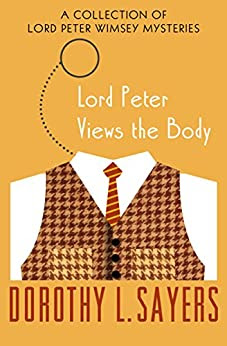
I finished Dorothy Sayer's book of short stories called Lord Peter Views the Body, which was a treat that I gave myself every afternoon between lunch and my to-do list. I also listened to the ten-hour audiobook of How Dante Can Save Your Life by Rod Dreher each evening while working through some new puzzle books. It's much more about Dreher than about Dante, but was a good intro into The Divine Comedy, which I plan to tackle in September (#100daysofdante). During my morning exercises, I worked my way through Agatha Christie's Why Didn't They Ask Evans? (audiobook), which isn't one of her best, but was a fun mystery to try and solve.

I also enjoyed a couple of short stories that I read along with the Literary Life podcast: The Machine Stops by E. M. Forster, and Reunion by Fred Uhlman. Since I'm out from under my heavy academic load, I'm not watching movies for stress-relief. I'm thankful to be back to reading, writing and blogging. 

Blessings,

Friday, July 23, 2021

Antigone by Sophocles

When the Literary Life group decided to read the Greek play Antigone, I gave it a pass. With a towering TBR list, I assumed I had better things to read. Silly me. When I saw that the audiobook was just over an hour, I caved in. Surprisingly, I didn't need the Lit Life group to understand the beauty and power of this short play. 

For one thing, the opening paragraph (called "The Argument") gives an overview of the story's principal events so you never have to wonder what is going on. Then comes a brief list of characters (the last two books I read would have been so much easier to understand if I'd had that!) After that, the reader plunges right in. I admit that having some background in Shakespearean English (or at least in the King James Bible) would be helpful in understanding the old-fashioned language. Once I got the hang of it, I loved the plucky heroine, the great dialogue, and the gorgeous wording.

The basic story is of a young woman who goes against the king's arbitrary command (to leave her dead brother unburied) and the heavy price everyone pays for it. Many universal themes are introduced, but the main one is civil disobedience. When does loyalty to family override loyalty to government? Antigone argues that the gods would not have approved of the king's edict. So, she is not only being loyal to her brother, but also to a higher Law. She says to King Creon: 

Nor did I deem that thou, a mortal man,
Could'st by a breath annul and override
The immutable unwritten laws of Heaven.
They were not born today nor yesterday;
They die not; and none knoweth whence they sprang. 

It was startling apropos to our present times as the government continues to encroach on personal religious beliefs.  

My translation (free via Hoopla) by Francis Storr was stunning in its beauty. Here are a few favorite quotes: 

Much thought extends a furlong into a league. (Which I loosely interpret to mean, "Overthinking turns an inch into a mile.")

Hope flits about on never-wearying wings. (Do you suppose this line could have inspired Emily Dickinson's famous poem?)

I would not weigh his wealth and power against a dram of joy.

Ironic statement from a position of power: 
Now if she thus can flout authority unpunished,
I am woman, she the man.

On Pride: To err is common
To all men, but the man who having erred
Hugs not his errors, but repents and seeks
The cure, is not a wastrel nor unwise.
No fool, the saying goes, like an obstinate fool.

Word lovers will revel in phrases like, "her brother lay unsepulchered." And the word "snaffle" made me laugh with delight (even though it's only an old-fashioned word for bridle.) Oh, if only I could slip this delightful phrase into a future conversation: "You vex me with your babblement."

A quick, but worthwhile read. I listened, and then loved it so much downloaded a copy to read again the next day.

Blessings,

Friday, July 9, 2021

Death at the President's Lodging by Michael Innes


Death at the President’s Lodging
 masquerades as a comfortable, vintage mystery (albeit more cerebral than most). The pace is slow as you watch the detective painstakingly interview each suspect; in Chapter 45 the intellectual fireworks start going off and you can hardly believe how the whole thing plays out. 

Inspector Appleby is called in to solve the mysterious murder of the president of St. Abbot’s College. It seems to be an “inside job” '(meaning one of the professors did it). Appleby is intrigued with the opportunity to interact with men of superior intelligence:

[But] He had an uneasy feeling that his own favorite technique, which was that of sitting back and watching and listening, was somehow inadequate – dangerous, indeed – in this case; something more aggressive was required. In discussion, all these people would be endlessly plausible – and they would hardly ever make a mistake.

I can't share any more of the plot without spoilers, so I'll just reiterate that Death at the President’s Lodging is one of the most stunning pieces of detective fiction I’ve ever read. It made me an instant admirer of Michael Innes (pen name for Scottish novelist and literary critic, John Innes Mackintosh Stewart).

Thank you, P.D. James for introducing me to this author through your book on detective fiction. Thanks to Kindle Unlimited, I was able to read the first book for “free”. Now I look forward to reading the rest of the series.

Blessings,

Friday, July 2, 2021

What I Read and Watched in June

I finished up a busy teaching schedule this month, reading only in snatches (early in the day and late in the evening). In general, though, if I had a free half hour, I watched a bit of a Hallmark mystery on YouTube. The acting is better in some films than others, but the mystery is usually interesting, and the romance takes a back seat, which I appreciate. The two movies that took me by surprise were from the Signed, Sealed, Delivered series. (From Paris with Love, Higher Ground) The premise of the show is that a team of four "postal detectives" try to match up letters from the dead letter office with their intended recipients.

I had tried to watch the series before, but thought the characters were too dorky. I discovered, however, that they grow on you. The acting is good and the characters' personal histories are interesting. (They each have experienced brokenness, which adds a richness to their stories) The music is great and the literary quotes dropped by the straight-laced Oliver O' Toole are a delight. The creator of the series, Martha Williamson, was head writer for the Touched by an Angel series and is not afraid to include elements of faith in the conversations. All in all, this has become a new favorite.

Books that I was able to complete this month were (1) Death at the President's Lodging by Michael Innes, a great mystery that I'll be reviewing next week. (2) Ideas Freely Sown by Anne White, a book about Charlotte Mason's teaching methods, which I read for Cindy Rollins' summer class. (3) So Much Generosity by Michael Greaney (overview of many Catholic novels), (4) Prodigal God by Timothy Keller, which was good but didn't dazzle me like his Meaning of Marriage and Counterfeit Gods. Finally, I read Rod Dreher's fascinating Live Not by Lies (also for Cindy Rollins' class), which I'll be reviewing soon. 

Did you read or watch anything in June that you'd recommend?

Blessings,

Friday, June 11, 2021

Quote from Ray Bradbury on Leaving a Legacy

Everyone must leave something behind when he dies, my grandfather said. A child or a book or a painting or a house or a wall built or a pair of shoes made. Or a garden planted. Something your hand touched some way so your soul has somewhere to go when you die, and when people look at that tree or that flower you planted, you're there.

It doesn't matter what you do, he said, so long as you change something from the way it was before you touched it into something that's like you after you take your hands away. The difference between the man who just cuts lawns and a real gardener is in the touching, he said. The lawn-cutter might just as well not have been there at all; the gardener will be there a lifetime
.

(from Fahrenheit 451 by Ray Bradbury, p. 149)

Blessings,